If we focus on the industry, there are many companies that treat marketing the wrong way. Why is it that some people do marketing so well, even in budget markets, that it increases their turnover, while others do expensive marketing but only survive?
Because there are similar products in the market, and simply singing their praises is often ignored by people, thinking it's advertising, because their product doesn't make any sense.
I've heard of many brands that think outside the box and don't just market, they use marketing to communicate their point.
So, let's explore this topic in detail: how such marketing can be achieved on a low budget, and even if the budget is large, what methods can be used to improve marketing with less effort.
What Is Marketing Communication?
Sales involves a salesperson approaching the customer, understanding them, and then presenting their point. However, marketing is very different. In these, you advertise and highlight your product, but this approach is also wrong.
Until now, we've been thinking of simply informing people about your product by any means necessary.
Shifting to Strategic Marketing
But there are ways to go beyond this. This is called strategic marketing. How does it work?
Its approach is very casual, but it also requires creativity. You try to indirectly communicate the product, making it clear that the target customer understands the product, its features, and its value. This can double or multiply sales.
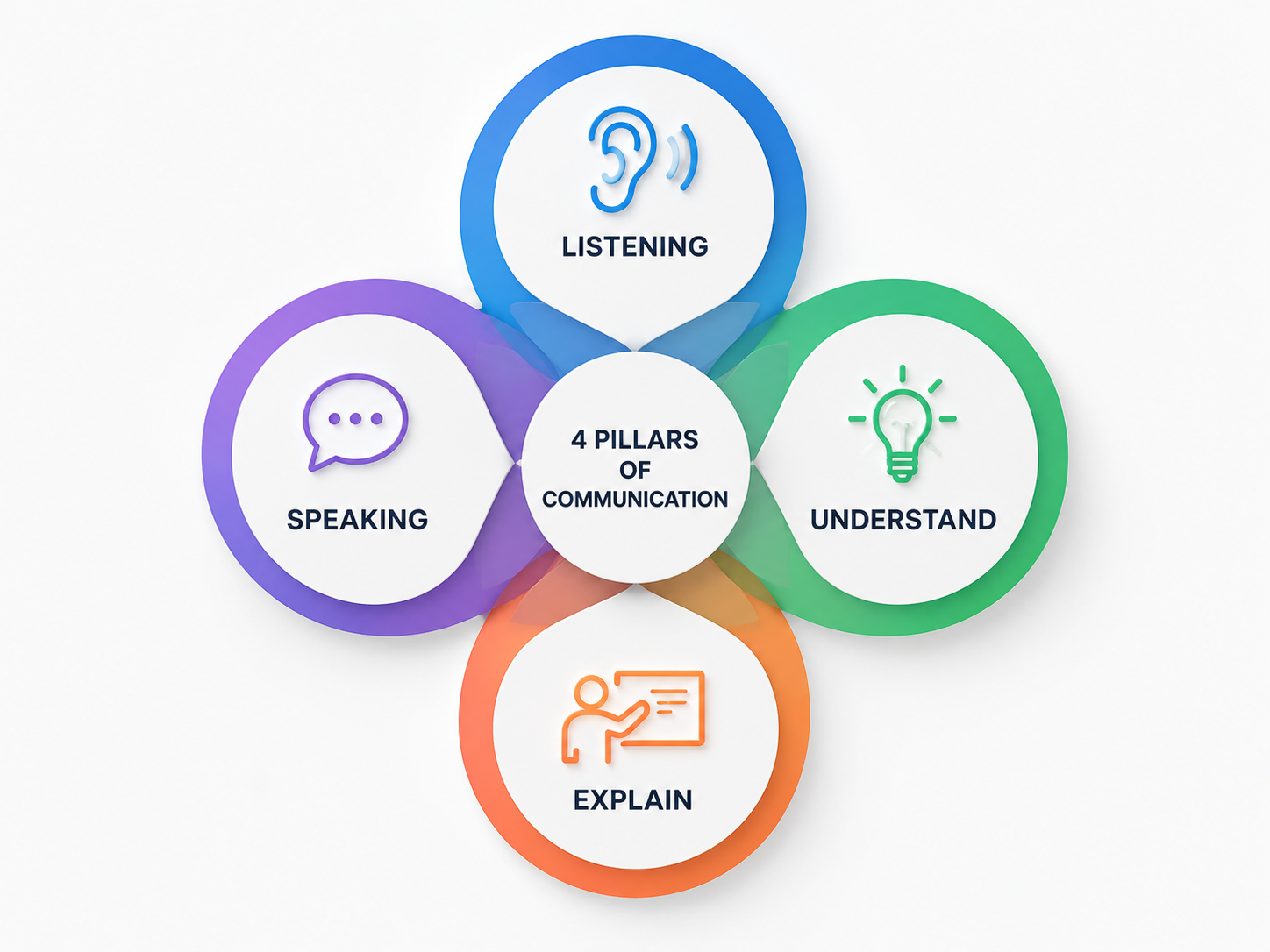
The Four Pillars of Communication
What's the difference between talking and communication? In talking, you just speak and nothing else. It's just general talk. But communication has four pillars.
- Speaking
- Listening
- Understanding
- Explaining
We have the first two pillars in our lives, but the other two are missing. Until now, we've only spoken and listened, but ignored the other two. In communication, you first speak and then listen to the other person's response. In understanding, you understand the other person, and then, once you've understood them well, you explain your point. This is called communication.
But the problem today is that we just talk and listen and then leave. This is where the customer doesn't understand, and sales decline. Only the brand survives.
Guiding the Customer Journey
What's its use in marketing? Marketing isn't just about reaching people or getting your brand noticed, but it's about how people perceive your brand.
In communication, we discussed how people perceive you. If your point isn't clear, all the money you invest in advertising is wasted.
Preparation is crucial before marketing. If you do the same marketing or advertising as usual, people will find too many options and will go to your competitors.
The best approach is to stay as far away from the competition as possible. To do this, you need to understand the third and fourth pillars of communication.
You need to understand how people perceive and understand your brand and your product. After understanding what they see in it that makes them want to buy or want to buy it. And then, don't just show off your product's uniqueness in the market. Don't market it as you like, but rather have a clear message that you can understand.
Abraham Lincoln said, "If you have four hours to cut a tree, spend the first three sharpening the saw."
Why? Because the sharper the saw, the faster it will cut. But after that, you won't have to work harder.
Psychology Behind Customer Thinking

Advertising only attracts people's attention towards you, but communication increases trust and value towards your brand.
If marketing is generic, its impact doesn't last long. But if communication and marketing are well-coordinated, customers won't even think about refusing.
Because even a boring product, regardless of its quality, will start to appeal to them. When the product doesn't seem confusing, and when they understand that the customer has an interest in your product, they stop comparing it to others. Whether it's beauty, fashion, or a unique product.
That's why people remember only a few brands among common products because they understand what they'll get. That's why their products stand out even in the competition.
Real Examples of Clear Messaging
That's why some brands never keep their marketing generic; they simply show what the product is. For example, Pidilite Fevicol, Maggi, and a footwear brand invented a new marketing method.

They made their slippers eco-friendly and made them into clay billboards. You know, clay billboards get wet and damaged in the rain. But this one was a beauty. The brand wanted to make people understand that plastic never decomposes and pollutes the soil.
And people throw away slippers within 5-7 months. And they presented the billboard as a value, making it clear to people how eco-friendly it is.
Case Study: Apple's Marketing Fix

When Apple was newly launched, it ran a 5-7 page article in newspapers for marketing, but this strategy didn't work. Steve Jobs was subsequently fired from his own company.
After that, when he started Pixar, he learned how to effectively market through storytelling and animation. At that time, Apple had 150-200 products. The CEO invited Apple's founder, Steve Jobs, back to Apple. But this time, he vowed to sell only 3-5 products, all others useless.

In marketing, he ditched big headlines and features and wrote a simple and clear message: "Think Different." This was for those who have the power to change the world. This campaign once again made Apple the coolest brand in the world.
The same philosophy drove the success of the "iMac G3" with its "Chic. Not Geek" appeal, the "iPod" by promising "1,000 songs in your pocket," the iPhone stating "Apple reinvents the phone," and the MacBook Air, famously introduced as "The world's thinnest notebook."
After Pixar, Steve Jobs' Apple marketing philosophy was "simplicity" and "emotional connect." He didn't sell features, but rather how the product would change your life.
Building High Converting Messages
Apple's story shows that communication isn't just about conversation, but also about marketing.
So, let's look at some marketing components that determine the future of a brand; otherwise, only the product will sell.
Writing Clear Headlines
First, the headline. Headlines attract people because when you read a magazine, article, or see a poster, the first thing you notice is the headline.
That's why, when creating a poster or billboard, the headline should be clear and have a direct, meaningful message.
Blueprint for Video Marketing
If you're making a video, the opening line and your slogan or CTA should be memorable. Because a CTA isn't just a closing, it's a promise, a trust, and a buyer's decision.
If possible, showcase a customer story, emotion, or moment in the video so that customers can remember that moment and reach for your product when the time comes. The stronger the buying decision, the faster the sales will be.
The Power of Simplicity
These days, every marketer says the same thing: "Make your hook so catchy that people keep watching!" But the truth is, if your hook is very creative, but people don't understand what you're selling, then that marketing is a failure.
This is where simplicity comes into play.
Avoid Being Too Clever
When people are on the internet, their brains are very tired. If they have to think for even two seconds after seeing your ad, "What does this brand want to say?", they'll scroll past.
- Vague & Flashy (Fails): "Fly your destiny on a new flight across the sky..." (Confusing, is this an airline? Or a course?)
- Simple & Clear (Sells): "Learn to speak fluent English in just 30 days." (Extremely clear and straightforward!)
Clarity Always Beats Creativity
Understand a big truth: Clear marketing always beats clever marketing.
Even if your pitch is a little simple or "boring," if it's clear, people will stay. When you're straightforward, the customer's chances of getting distracted are eliminated. They immediately understand what problem you're solving.
The Simple Formula: Clickbait or noise doesn't build business. Set the customer's mind at ease. Speak clearly, speak simply, and say what's relevant to them.
The hook in a video or poster isn't as important as clarity, simplicity, and the ease with which people can understand it in one go. It should be easy to read and easily remembered.
Conclusion: Why Communication Wins
Great marketing does not require a massive budget. It simply requires you to bridge the gap between your brand and your customer's brain. When you move away from empty advertising and focus on understanding your audience and explaining your solution clearly, you instantly stand out from your competitors.
Take inspiration from Apple's turnaround. Ditch the technical jargon, stop trying to look too clever, and prioritize simplicity over flashy hooks. When your headlines are direct, your video anchor points are sharp, and your CTA makes a clear promise, your audience will naturally trust your brand. Keep your message clean, simple, and easy to read.
What's Next? Now that you have mastered the power of clear communication, it is time to scale your growth. In our next blog post, we will dive deep into actionable marketing hacks. We will look at the specific psychological triggers and shortcuts you can use to multiply your conversions with less effort. Stay tuned!